Have a pattern you love, but the yarn the designer named leaves you cold? Wondering how to substitute yarn in a knitting pattern? This article will help you get comfortable with the idea.
- Can you swap the yarn named in a pattern for another?
- Where should a yarn swap start?
- Yarn thickness is only the beginning
- Metreage or weight — which matters more?
- A swatch will tell you the truth. Will it?
- Why do different fibres behave differently?
- Yarn swaps and how a project looks: merino fingering as an example
- For sensitive skin: what can replace mohair?
- Mohair or alpaca with silk — which to choose?
- Can alpaca with silk replace mohair in every pattern?
- What else changes when you change fibre?
- How to substitute yarn in a pattern and check that the stand-in will work
- What about yardage?
- A good substitute does not have to be identical
Can you swap the yarn named in a pattern for another?
In most projects you can replace the yarn with another, as long as you match thickness, gauge and fibre behaviour to the construction of the design.
That matters because the yarn the designer names is first of all the material the pattern was developed on. It does not mean it is the only material you can use. Trouble starts when we treat a swap as pure maths.
“The pattern needs fingering. I have fingering. Done.”
Not necessarily. Two yarns labelled fingering can make completely different fabrics. Likewise, two yarns with similar metreage and the same gauge can differ in spring, drape, or finished look.
Why? Because the end result depends not only on yarn thickness, but also on fibre type, yarn construction, twist, fibre length and character, and how the finished fabric behaves after washing and while worn.
Where should a yarn swap start?
Before you hunt for a specific substitute, look at the project. Ask yourself three questions:
1. How thick is the original yarn?
Is it lace, fingering, sport, DK or worsted?
2. How does the fabric behave?
Is it springy? Soft? Fluid? Fuzzy? Dense?
3. What do you actually want?
Do you want a result as close as possible, or are you happy to let the project become a different interpretation?
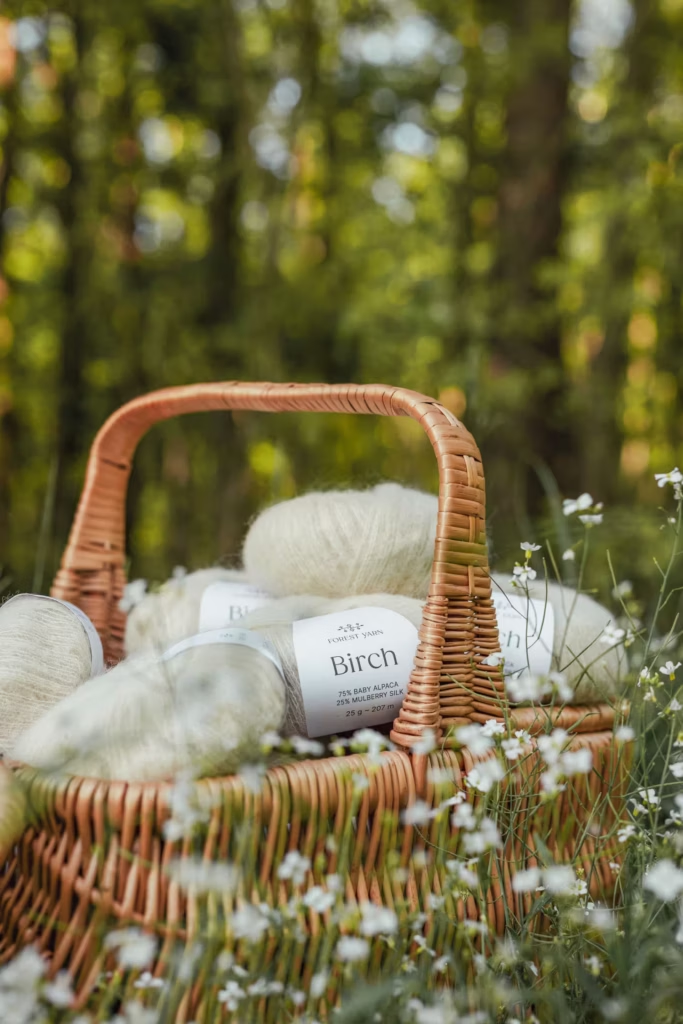
That last question matters a lot. A simple example: if the pattern is designed for mohair and you choose alpaca with silk (e.g. Birch), you will not get an identical fabric. The effect will be close, but the finished knit will look and behave a little differently.
Yarn thickness is only the beginning
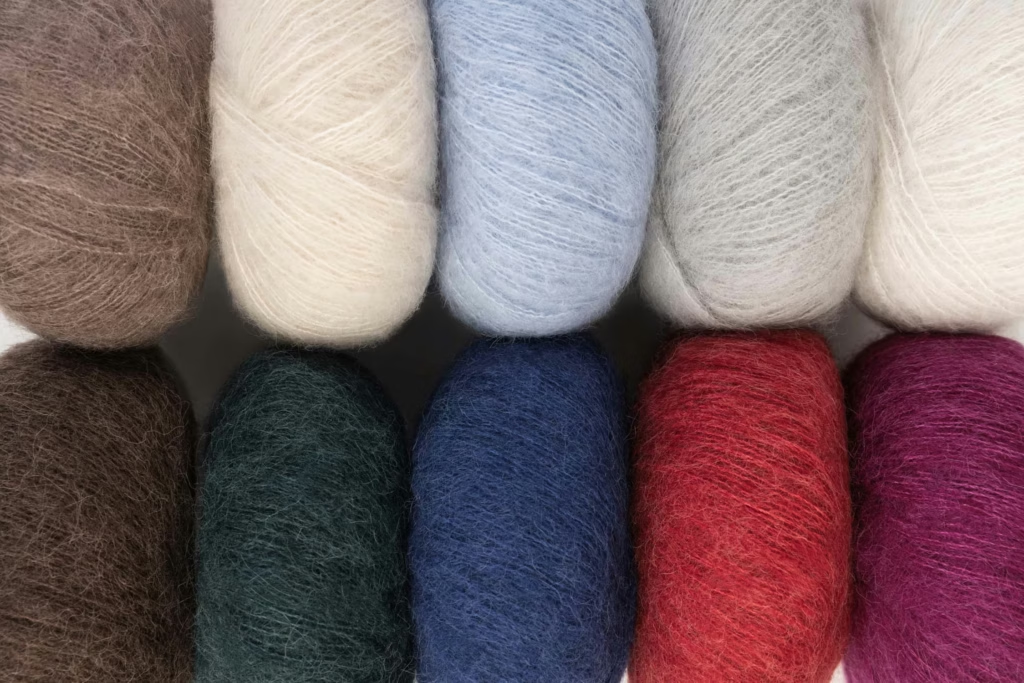
Labels such as lace, fingering or DK are very useful, but they are only part of what you need for a successful substitute.
The Craft Yarn Council treats weight categories as ranges, not a single exact thickness. For super fine, which includes many fingering yarns, it suggests a rough gauge of 27–32 stitches per 10 cm.
That means two yarns both called fingering can already behave differently on the needles.
So when you choose a substitute, check:
- metreage and skein weight,
- the manufacturer’s suggested gauge,
- fibre content and yarn construction,
- projects already made with that yarn.
And then knit your own swatch.
Metreage or weight — which matters more?
If a pattern asks for 300 g of yarn, that does not mean you need three 100 g skeins of the substitute. One yarn may give 200 m in 100 g. Another — 400 m.
So when you swap, compare metres per 25 / 50 or 100 grams.
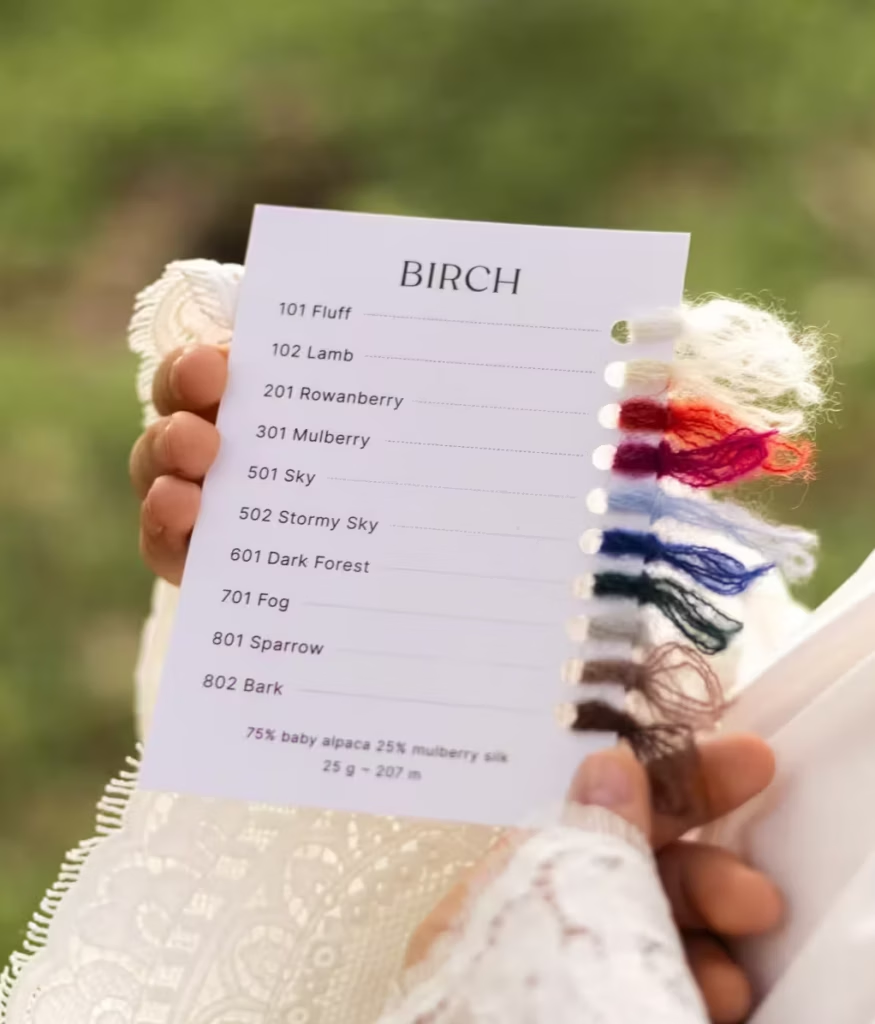
Example: the designer used a lace yarn with 210 metres in a 25 g skein. Size S uses 150 g. Swapping to Birch, which has 207 metres in 25 g, yardage will be almost the same.
Is that enough for a successful swap? Not necessarily. Those figures help you know how much yarn you need. They say little about how the fabric will look.
A swatch will tell you the truth. Will it?
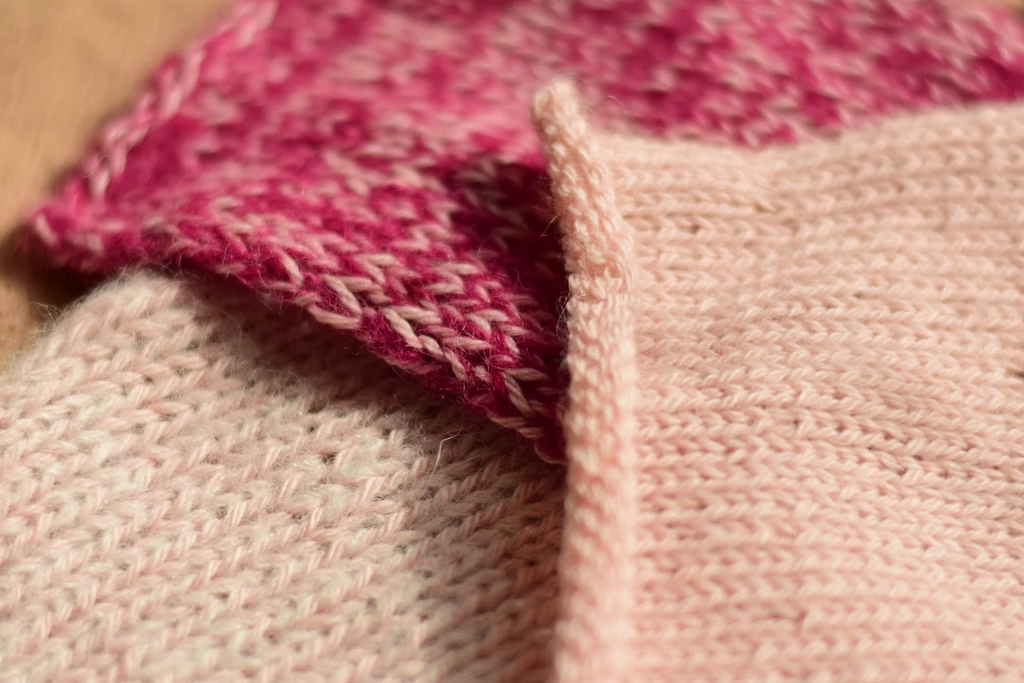
What is a swatch? A piece of fabric that shows how many stitches and rows (rounds) fit in a 10 × 10 cm square. The takeaway is simple:
A swatch helps you control the dimensions of the project.
If the pattern asks for 20 stitches per 10 cm and your yarn gives 20 stitches per 10 cm, you have a good starting point. But a swatch does not fully describe how the material behaves.
Two swatches can both measure exactly 20 stitches × 28 rows and still differ in spring, density, softness, halo or sheen — and in how they sit on the body.
In practice you can hit the right stitch count and still get a fabric with a completely different character. That is one of the core problems in yarn substitution.
Make a swatch. Wash it. Then decide.
It sounds unexciting. But this is where a swatch stops being a chore to tick off and becomes the start of a project you are truly happy with.
Knit a swatch large enough to measure in several places. Then:
1. Measure it before washing.
2. Wash it the way you plan to wash the finished knit.
3. Leave it to dry completely.
4. Measure again.
5. Check how stitch count and texture changed after washing.
6. Stretch the swatch and see how it responds.
7. Decide whether you like the fabric you are looking at.
A swatch is not only about finished dimensions. It is also a chance to see how that fabric will behave. With a big change in fibre, treat the swatch more seriously. The further the fibre is from the one in the pattern, the more information you can pull from it.
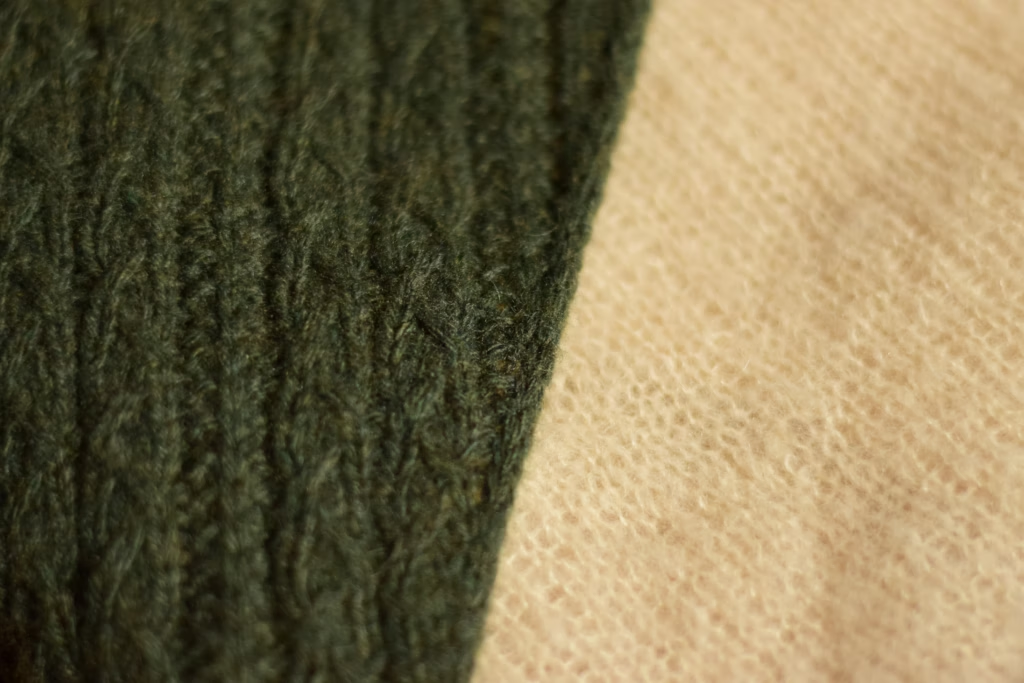
Why do different fibres behave differently?
This is the heart of every swap.
Every fibre has its own structure, and that structure shapes how the fabric behaves.
Wool
Wool has a natural crimp — a wave along the fibre. That structure gives spring and the ability to return toward its original shape after stretching.
That is why woollen yarns are often a good choice for knits that should hold their shape and respond well to movement.
Alpaca
Alpaca has a different fibre structure from sheep’s wool. It can feel very soft and smooth, and in practice alpaca yarns are often less springy and more drapey than typical wool yarns. Remember that alpaca is not one material — Huacaya and Suri differ in fibre character, and quality also depends on diameter, length and other parameters.
Silk
Silk is a smooth, strong, naturally lustrous fibre. It sits well in fabric and can bring a blend smoothness, sheen and a more fluid drape.
Mohair
Mohair stands out for sheen, a smooth fibre surface and strength. In fine knitting yarns, fibres that stand out from the core also create a halo — a soft mist around the stitches.
Those differences mean that the same construction worked in different fibres can produce a completely different fabric.
Yarn swaps and how a project looks: merino fingering as an example
Suppose the pattern was designed for merino fingering. How does the project change with other fibres?
Merino → merino with silk
A relatively subtle swap. The yarn still contains wool, so you keep some of its familiar behaviour, but silk can add smoothness and sheen, and the fabric will often drape more fluidly.
When does it make sense? When you like the merino construction but want a smoother, more liquid finished knit.
Merino → alpaca
Here the change can be more visible. Alpaca is usually less springy than sheep’s wool, so the fabric may hang more freely and change shape over time under its own weight. That is why, with yarns high in alpaca, a washed swatch matters especially.
It can be wonderful in a loose sweater. In a fitted silhouette, be more careful.
Merino → alpaca + silk
Here you get an even clearer shift in character.
Alpaca softness + silk smoothness and sheen + less spring than typical wool.
This is no longer a swap expecting the same results. This is a different fabric.
For sensitive skin: what can replace mohair?
This is a swap many knitters worry about. Fairly so — mohair and alpaca with silk will not give an identical effect.
What does mohair give you?
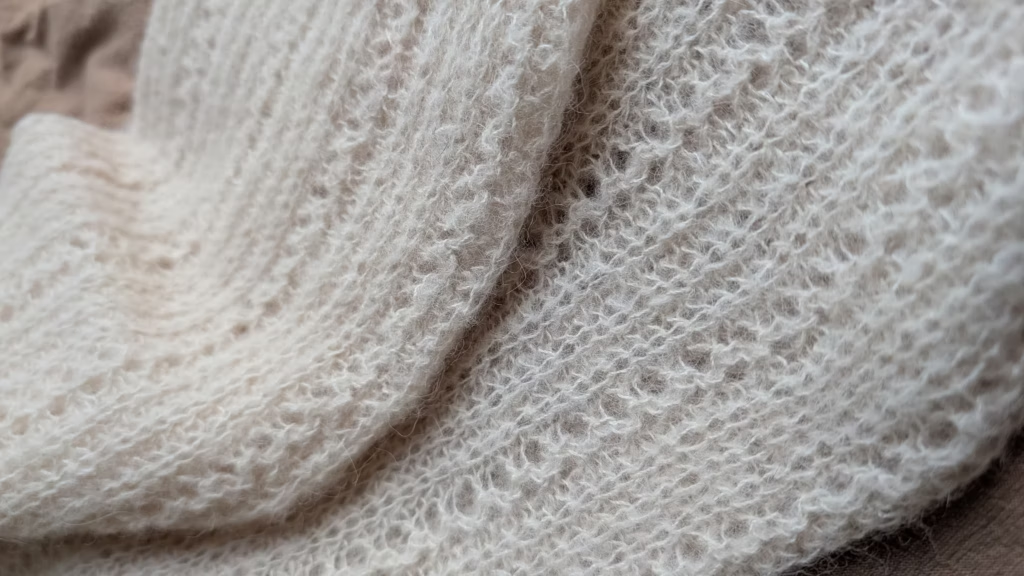
The most distinctive trait of a fine mohair yarn is its “halo” — fibres standing out from the core create a fuzzy layer around the stitches.
That is why even a very fine mohair adds volume through that “cloud” of fibre.
So mohair cannot always be replaced one-for-one with another lace yarn.
What will alpaca with silk change?
A blend of baby alpaca and silk can make a light, soft fabric, but its character will differ. Instead of mohair’s typical, pronounced fuzz you get:
- a more subtle halo,
- a gentle sheen,
- a soft, fluid fabric.
Silk brings smoothness and lustre; alpaca brings softness and a characteristic halo. In practice such a blend can feel more “fluid” than classic mohair.
Mohair or alpaca with silk — which to choose?
| If you care about… | Consider… |
| a clear, characteristic halo | mohair |
| a light, fuzzy surface | mohair |
| more fluid fabric | alpaca + silk |
| smoothness | alpaca + silk |
| a subtle sheen | alpaca + silk |
| a soft, drapey effect | alpaca + silk |
| a more classic misty outline | mohair |
Alpaca with silk is also a good choice if you worry mohair will feel itchy. Birch uses alpaca under 22 microns, which for most people feels distinctly kinder than mohair.
Can alpaca with silk replace mohair in every pattern?
Not always in the same way.
Look at the construction: if the project uses mohair as a very fine, fuzzy strand held with a second yarn, switching to alpaca with silk can change fabric volume, finished look and behaviour. That does not make the swap a bad idea.
It simply means it is worth checking what another yarn will change in this particular project.
In a very open construction the difference can be especially clear. In a simple sweater or shawl it may be exactly the effect you were after.
What else changes when you change fibre?
Cables and texture
Springy wool can show structured stitches beautifully. A more drapey blend can make the same texture softer and less crisp. If the design rests on complex cables, do not look only at gauge. Check whether the stitches still have enough definition.
Lace
Here it can go the other way. A more fluid fibre can open and emphasise lace beautifully.
Ribbing
This is one place where a difference in spring is especially easy to spot. If you swap springy wool for a less elastic blend, check whether the rib returns to the shape you need after stretching.
Weight
If the new yarn makes a heavier fabric, a finished sweater may lengthen over time. So check not only a flat swatch, but also how the fabric behaves when hanging.
How to substitute yarn in a pattern and check that the stand-in will work
Instead of memorising a dozen rules, walk through a simple process.
1: Check thickness and metreage
2: Compare fibre and yarn construction
3: Knit a swatch and wash it
4: Judge the fabric and decide
Ask yourself:
“Does this yarn make the fabric this project needs?”
What about yardage?
When you choose a substitute, do not convert skein counts one-for-one.
If the pattern needs: 6 × 50 g = 300 g, but the original yarn is 200 m / 50 g, the project needs about: 6 × 200 m = 1200 m.
If your substitute is 250 m / 50 g: 1200 ÷ 250 = 4.8 skeins.
In practice you buy 5 skeins.
Of course real usage depends on size, gauge, construction and how you knit.
That is why metreage is a much better reference than skein count alone.
Do not be afraid to make the project your own
A pattern is not an instruction manual for one specific yarn. It is a construction you can interpret in different ways. The more you change the yarn’s properties, the more carefully you should check the swatch and fabric behaviour — but there is no reason to assume a merino pattern must be knit in merino, or that a mohair pattern cannot be knit in alpaca with silk.
It can. You will simply get something a little different. And that is the charm of experimenting with yarn.
A good substitute does not have to be identical
If you take only one thing from this article, let it be this:
Do not hunt for an identical yarn. Hunt for a yarn that suits the project.
Mohair can become alpaca with silk. Merino can give way to a merino–alpaca blend.
The result will be different. But different does not mean worse.
Sometimes that difference is exactly what makes the project look the way you wanted.
And that is why it is worth putting the pattern down for a moment and looking at yarn not as a set of label numbers, but as the material you will work with for dozens of hours.
Tell us whether this article helped you! Or is there a specific topic you would like to go deeper into? Describe what you are stuck on and let us know how we can help.
Fluff
101 Fluff / 35,00 zł incl. VAT
Zobacz kolor